

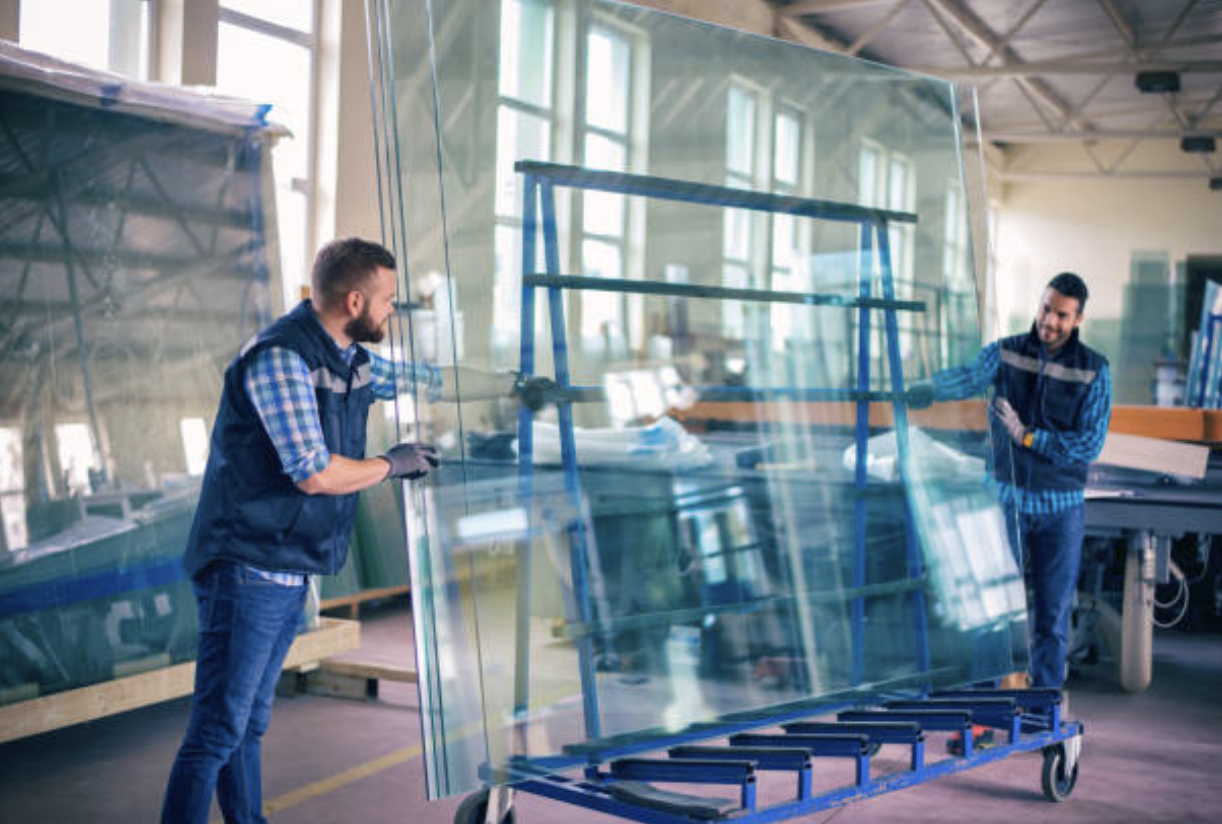
Glass manufacturing is complex enough without logistics headaches. Yet many glass factories still manage deliveries through spreadsheets, phone calls, and paper-based systems disconnected from their production software. The result? Lost shipments, confused drivers, angry customers, and hours wasted tracking down where orders actually are.
There’s a better way. When logistics management is built directly into your glass manufacturing software — not bolted on as an afterthought — everything changes. Here’s why integrated logistics is becoming essential for competitive glass manufacturers.
The Hidden Cost of Disconnected Systems
Before diving into solutions, let’s understand the problem. When your production system doesn’t talk to your delivery system, you face:
- Double data entry: Staff manually transfer order information from production to delivery spreadsheets
- Visibility gaps: “Is order #4521 on a rack? Which truck? When did it ship?” — questions that shouldn’t take 15 minutes to answer
- Partial shipment chaos: When you ship 40 of 100 units today and 60 next week, tracking becomes a nightmare
- Rack management blindness: Which racks are available? Which are on trucks? Which are at customer sites?
- Documentation errors: Delivery notes that don’t match what’s actually loaded
These aren’t minor inconveniences. A single mis-shipped order can cost hundreds in re-delivery fees, damage customer relationships, and consume hours of staff time to resolve.
7 Advantages of Integrated Logistics
1. Single Source of Truth
When logistics lives inside your manufacturing system, there’s one database, one interface, one truth. An order created by sales flows automatically through production scheduling, shop floor tracking, rack loading, and delivery — without anyone retyping data or reconciling spreadsheets.
Your customer service team can answer “Where’s my order?” in seconds, not minutes. They see production status, loading status, shipment status, and delivery confirmation in one screen.
2. Real-Time Rack Visibility
Glass transport racks are valuable assets — and often in short supply. Integrated logistics tracks every rack through its lifecycle:
- Empty — available in the warehouse
- Loading — glass being placed on rack
- Dispatched — on a truck heading to customer
- Returned — back from delivery, ready for reuse
No more wondering where your A-frames went. No more phone calls to drivers asking “Do you still have our rack?” The system knows.
3. Effortless Partial Shipments
In glass manufacturing, partial shipments are the rule, not the exception. Production delays, quality holds, or customer requests mean you often ship orders in multiple deliveries.
Integrated logistics handles this natively. Ship 4 of 10 IGU units today? The system tracks that those 4 went on Rack A in Shipment D-2603-1, while the remaining 6 will ship later in D-2603-2. Delivery documents automatically show “4/10” so everyone knows what’s delivered and what’s pending.
4. QR Code Loading Verification
The same QR codes used in production become your loading verification system. Workers scan each piece as it goes onto a rack. The system confirms:
- Correct order (no mix-ups)
- Correct quantity (no over/under loading)
- Correct rack (assigned to right shipment)
- Production complete (quality approved)
Loading errors get caught at the dock, not at the customer site.
5. Automatic Delivery Documentation
Delivery notes and documents generate automatically from shipment data. No manual creation, no typos, no missing items. Documents show exactly what’s loaded, in what quantities, going to which address.
For partial shipments, documents display loaded quantities vs. total ordered (e.g., “4/10 pcs”), so customers immediately understand what they’re receiving and what’s still coming.
6. Complete Shipment History
Every shipment leaves a permanent trail. Six months from now, when a customer calls about an order, you can instantly see:
- Which racks carried the order
- Who loaded them and when
- Which shipments delivered which portions
- Delivery dates and confirmations
- Rack return dates
This audit trail is invaluable for customer disputes, quality investigations, and continuous improvement.
7. Delivery Performance Analytics
With integrated logistics, delivery metrics become available alongside production metrics:
- On-time delivery rate
- Average rack turnaround time
- Shipments per driver/route
- Partial vs. complete shipment ratio
- Customer delivery preferences
These insights help you optimize routes, improve rack utilization, and identify bottlenecks in your delivery process.
Integrated vs. Disconnected: Side-by-Side
| Scenario | Disconnected Systems | Integrated Logistics |
| Customer asks: Where’s my order? | 5-15 min to check multiple systems | 10 seconds — one screen shows all |
| Loading glass on rack | Paper checklist, manual verification | QR scan confirms each piece |
| Partial shipment tracking | Complex spreadsheet formulas | Automatic: shows 4/10 delivered |
| Generating delivery note | Manual creation, error-prone | One click, auto-generated |
| Finding available racks | Walk the warehouse or call drivers | Real-time status dashboard |
| Delivery history lookup | Dig through filing cabinets | Instant search, full audit trail |
Making the Switch
If you’re currently managing logistics separately from production, the transition to integrated systems doesn’t have to be disruptive. Modern glass manufacturing software like MonitGlass allows gradual adoption:
- Start with rack tracking — create your rack inventory and begin scanning loads
- Add shipment management — create shipments and assign orders
- Enable partial shipments — handle complex delivery scenarios
- Automate documentation — generate delivery notes from shipment data
Each step delivers immediate value while building toward full integration.
The Bottom Line
Glass logistics is too complex and too critical to manage with disconnected tools. When your logistics system is built into your manufacturing software, you get:
- Fewer errors (single data entry, automated verification)
- Faster answers (real-time visibility, complete history)
- Better asset utilization (rack tracking, turnaround optimization)
- Happier customers (accurate deliveries, professional documentation)
- Actionable insights (delivery analytics, performance metrics)
The question isn’t whether integrated logistics will become standard in glass manufacturing — it’s whether you’ll adopt it before or after your competitors.
Ready to streamline your glass logistics?
Schedule a demo to see MonitGlass logistics module in action.
contact@monitglass.com | +48 518 260 704 | www.monitglass.com

Comments are closed