


New Year, New Challenges: Why the Beginning of the Year Is the Perfect Time to Upgrade Your Glass Factory
- Jan 19
- 5 min read
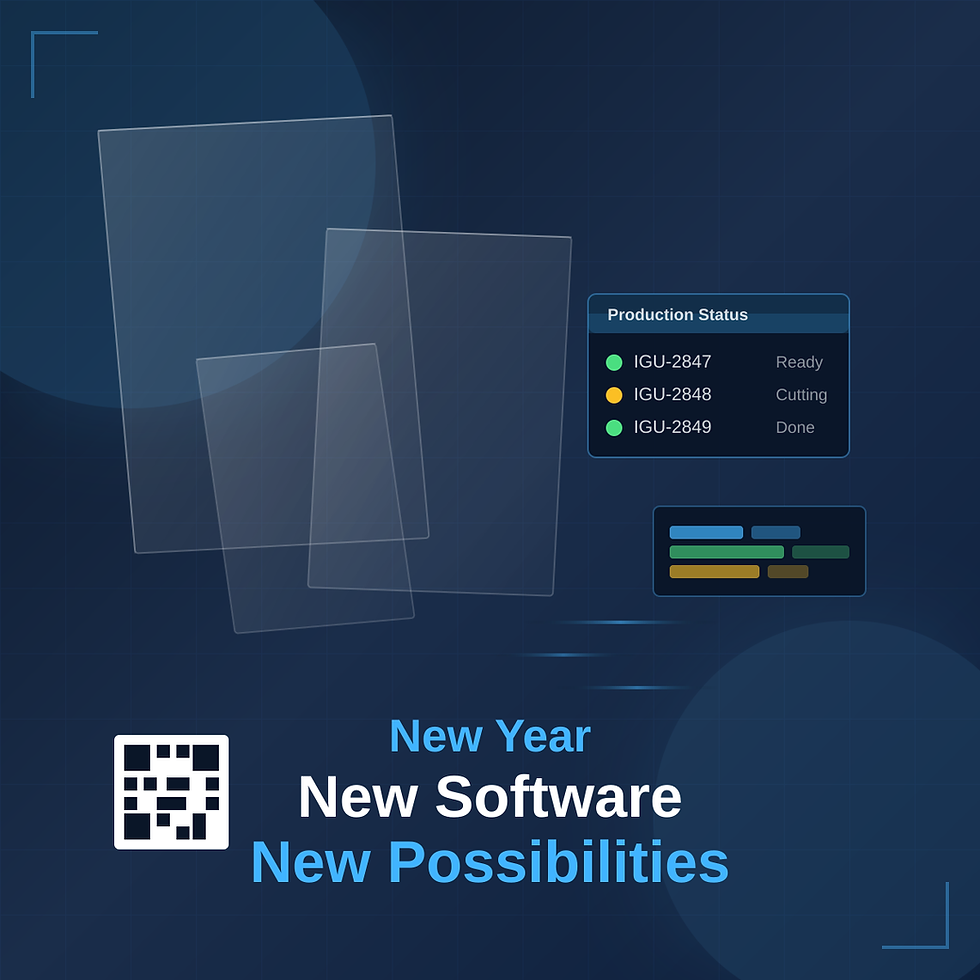
The calendar has turned, and with it comes the annual ritual of setting goals and making plans. For glass manufacturers, the new year often brings a familiar mix of optimism and operational challenges. Orders are picking up after the holiday slowdown, production targets are being set, and somewhere in the back of your mind, you know there are inefficiencies that need addressing.
If upgrading your glass factory software has been on your "someday" list, consider this: there's never been a better time to make that move than right now.
The Psychology of New Beginnings
There's something powerful about a fresh start. January feels like a blank slate — a chance to leave behind last year's frustrations and build something better. This isn't just motivational talk; it's backed by research. People are significantly more likely to follow through on changes initiated at temporal landmarks like the new year.
For glass manufacturers, this psychological reset creates a unique opportunity. Your team is already in "change mode," mentally prepared to adapt to new processes. Training on new software in January means everyone starts the year together, with fresh motivation and no mid-year disruption.
Why Glass Factories Hesitate (And Why They Shouldn't)
We've spoken with hundreds of glass manufacturers over the years, and the reasons for delaying software upgrades are remarkably consistent.
"We're too busy right now." This is the eternal paradox of manufacturing. You're too busy to implement solutions that would make you less busy. The truth is, there's rarely a "perfect" time. But Q1, before the spring construction rush hits full force, offers a window that many glass factories overlook.
"Our current system works well enough." Excel spreadsheets and legacy systems can indeed "work." But working and thriving are different things. Every hour spent manually tracking orders, every pricing error, every lost piece of glass represents hidden costs that accumulate silently.
"The learning curve will slow us down." Modern glass manufacturing software is designed with user experience in mind. Systems like MonitGlass can be implemented in 2-4 weeks, with most teams becoming proficient within days. The temporary slowdown is far outweighed by the permanent efficiency gains.
"It's a big investment." Consider this: What does it cost when an order slips through the cracks? When a pricing error goes unnoticed? When you can't give a customer an accurate delivery estimate? The cost of inefficiency is real — you just don't see it on an invoice.
Five Reasons to Start Your Software Upgrade Now
1. Beat the Spring Rush
For many glass manufacturers, Q1 is relatively calmer before construction season accelerates. Implementing new software now means your team will be fully comfortable with the system when order volumes peak. You'll handle the spring rush with better tools, not scrambling to learn new processes under pressure.
2. Fresh Budget, Fresh Possibilities
Many companies allocate new budgets in January. Software investments made early in the fiscal year have the full year to demonstrate ROI. By December, you'll have concrete data showing how the upgrade impacted your production efficiency, error rates, and customer satisfaction.
3. Align with Industry Trends
The glass industry is evolving rapidly. Customers expect faster quotes, accurate delivery estimates, and detailed traceability. Competitors who have adopted modern glass ERP and MES systems are winning business with capabilities that spreadsheet-based operations simply can't match. Starting your digital transformation now keeps you competitive.
4. Team Motivation Is High
January brings a natural energy for improvement. Your production team, office staff, and management are all thinking about how to make this year better than last. Channeling that energy toward a meaningful operational upgrade creates momentum that carries through the entire year.
5. Compound Benefits Over Time
Every day you delay is a day of inefficiency that could have been avoided. Implementing glass production software in January means 12 months of benefits in 2026. Wait until July, and you've already lost half a year of potential improvements.
What Modern Glass Manufacturing Software Actually Does
If you're still using Excel or outdated systems, you might not fully realize what you're missing. Here's what contemporary glass factory software brings to the table.
Unified Order Management. No more juggling spreadsheets. Every quote, order, and production job lives in one system. When a customer calls asking about their IGU order, you have the answer in seconds.
Real-Time Production Visibility. QR code tracking lets workers update production status with a quick scan. Managers see exactly where every piece of glass is — no more walking to the floor to find out what's happening.
Accurate, Instant Quoting. Built-in pricing engines calculate costs based on glass types, dimensions, processing requirements, and current material prices. What used to take 30 minutes now takes 3.
Smart Scheduling. Visual production calendars show capacity across cutting, processing, and assembly. When priorities change, the schedule updates automatically.
True Cost Understanding. Know the actual cost of every order, including materials, labor, and waste. Make pricing decisions based on data, not gut feelings.
Making the Transition Smoother
The thought of changing systems can feel overwhelming. Here are practical steps to make your software upgrade successful.
Start with clear goals. What specific problems do you want to solve? Faster quoting? Better production visibility? Reduced errors? Defining success criteria helps focus your implementation.
Involve your team early. The people who will use the system daily should have input in the selection process. Their buy-in is essential for successful adoption.
Plan for data migration. Your customer lists, price sheets, and product configurations don't need to be re-entered from scratch. Good software vendors help transfer existing data into the new system.
Embrace gradual rollout. You don't have to switch everything at once. Start with order management, then add production tracking, then expand to scheduling. Building competence incrementally reduces overwhelm.
Commit to training. Even intuitive software requires proper training. Invest time upfront to ensure everyone understands not just how to use the system, but why each feature matters.
The Cost of Waiting Another Year
Imagine it's December 2026. You've spent another year with the same inefficiencies — the same lost orders, the same pricing errors, the same frustrated searches for order status. Your competitors who upgraded their systems have been operating more efficiently for 12 months.
Now imagine the alternative. By December, your team has been using modern glass manufacturing software for nearly a year. Quotes go out faster. Production visibility has eliminated the daily "where's my order?" calls. Scheduling is proactive instead of reactive. You have data showing exactly how your operations have improved.
Which scenario would you prefer?
Taking the First Step
Change is never easy, but the new year provides a natural catalyst. If your glass factory is still running on spreadsheets or outdated software, 2026 is the year to make a change. The technology exists, the implementation is manageable, and the benefits are real.
The only question is whether you'll seize this moment or let another year slip by.
Ready to explore what modern glass manufacturing software can do for your factory? Schedule a free demo to see MonitGlass in action. Our team will show you how our ERP and MES platform handles quoting, production tracking, QR labeling, and cost management — all designed specifically for glass processors like you.
Contact us at: contact@monitglass.com


